


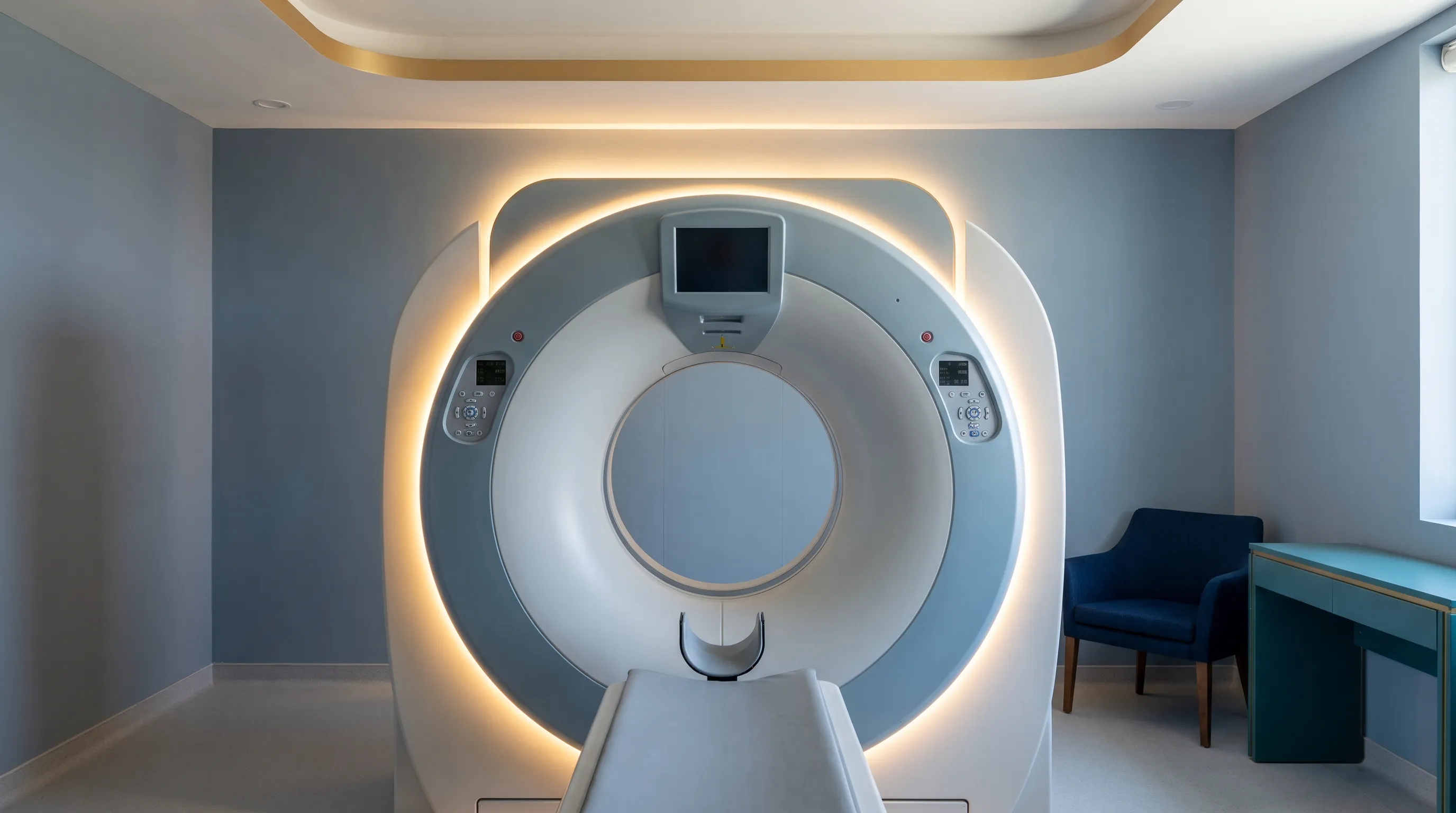
Understanding Your MRI Scan
What happens inside this large cylindrical machine, and why it is a revolution in diagnosing diseases without harmful radiation.
4 min readThe Magnetic Resonance Imaging (MRI) machine is one of the greatest innovations in medical history. Unlike X-rays which use radiation, an MRI uses a powerful magnetic field and radio waves to produce highly detailed 3D images of internal organs.
For many, the experience inside the cylindrical machine can be daunting. Understanding what is happening will make you more relaxed and cooperative during the scan.
How does the machine work?
The human body is largely composed of water (which contains hydrogen atoms). The machine's strong magnetic field forces these atoms to align in one direction. Then, radio waves are sent that temporarily disrupt this alignment. When the atoms return to position, they emit signals that a computer captures and translates into incredibly clear images of soft tissues (like the brain, muscles, and ligaments).
Why is the machine so loud?
During the scan, you will hear loud tapping and buzzing noises. This is completely normal! These sounds are caused by magnetic coils being turned on and off rapidly to create images. You will be provided with headphones to protect your hearing or listen to calming audio.
Why prefer MRI in certain cases?
- Does not use any ionizing radiation (very safe)
- Provides amazing details for soft tissues (nerves, cartilage, and ligaments)
- Essential for diagnosing tumors and brain/spinal cord issues
- Can image blood vessels clearly
- Can image the body from multiple angles without moving the patient
Preparing for the Scan
- Strictly no metal objects (watches, keys, jewelry) are allowed in the room
- Inform the radiologist if you have a pacemaker or metal shrapnel in your body
- If you suffer from claustrophobia, tell your doctor beforehand for assistance
- Remaining completely still during the scan is crucial to avoid blurry images
FAQ
How long does the scan take?
It usually takes between 20 to 45 minutes depending on the body part being imaged.
Is an MRI safe for pregnant women?
It is generally considered safe, but as a precaution, doctors avoid performing it during the first trimester unless absolutely necessary.
Diagnosis starts with a clear image
Book your imaging appointment and results reach your treating doctor quickly.